About
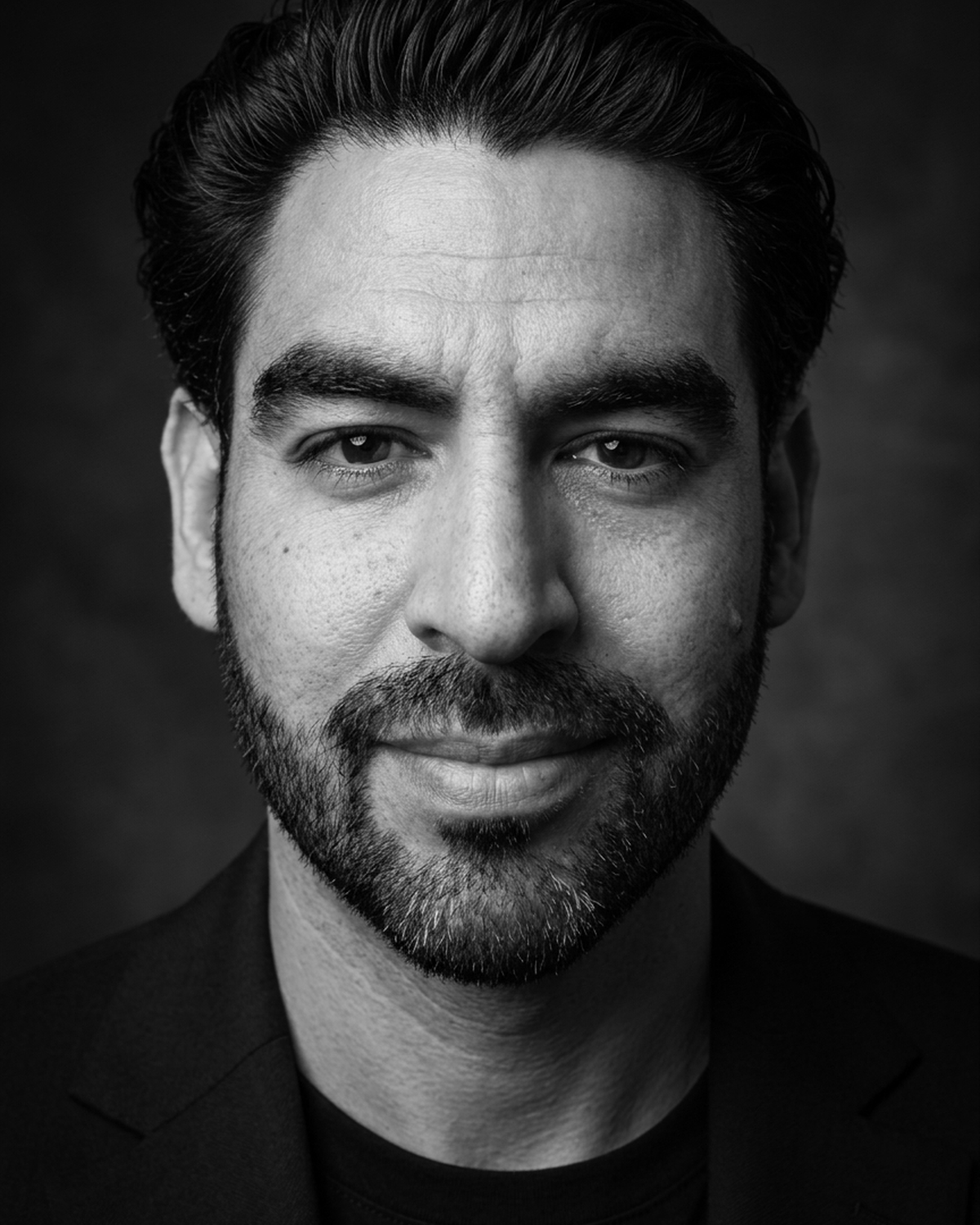
Ricardo Benavente is the founder of Creytix, the business operating-system platform, and AlignAlgo, the decision-systems practice. Creytix turns how a business really operates — roles, workflows, rules, constraints, data — into deployable software the organization can understand, own, and improve. AlignAlgo designs and governs the decision systems inside it: the algorithms, matching logic, and rules that shape outcomes.
The short story
At 22, Ricardo was hired as an Apple Store sales associate without owning a single Apple product. On hiring day, the trainers split about a hundred new hires into role groups, gave almost no direction, and left the room for fifteen minutes. Ricardo started asking the other groups what they'd been given, stood on a chair, and said: why don't we just build a store? They rearranged the room into a working mock Apple Store. The training leader stopped the exercise and said that in all his years running it, nobody had ever built one.
He didn't claim the idea — another hire tried to, and couldn't carry it. Ricardo remembers it as the day he recognized something about himself: "Once I see that there is no clear direction, I'll join."
That pattern followed him. Working premium service floors — Nordstrom, Pendry, La Valencia — taught him what "right" looks like. Running his own staffing company taught him to read people. And every time he tried to have something built, the specialists passed the work along: the developer needed a designer, the designer needed an animator, the animator needed assets — until he was drawing the logo himself on a piece of paper. He hadn't wanted to be part of the process. The process kept handing him the pen.
The website relay ran through a designer (his first look at Figma), a Shopify store abandoned over premium-tier limits, and a team of overseas developers with money going out and no product coming back. Then, on his birthday — May 31 — a coder helped him install Cursor. Within about ten days, Ricardo was building pieces the developer still needed to build. He paid the developer for the work done and absorbed the role: frontend fixes, backend work, the whole backend, then the company's own PBX phone system.
His rule, earned the hard way: "I don't pay for something that's gated."
Behind the output is a mechanism he worked out on himself years earlier. In school, low grades led to disability testing; the examiner told him the battery had included an IQ test — ADD, and a score of 142, as he remembers it. His takeaway wasn't the number but the math: focus multiplies whatever capacity is already there. A distracted 142 becomes a focused 142. AI, in his telling, is a bigger version of the same thing — a multiplier on the person using it.
Today he builds as a solo founder: deterministic systems handle the repeatable work, AI handles the exceptions, and waste — tokens, money, motion — is the enemy. The point, as he states it, is to give people control back: algorithms that don't answer to advertisers, tools that don't treat the user as inventory. "Not everybody can be a sheep."
Read the full story in the Align Newsroom →
Business systems should be understandable, ownable, and improvable by the people who depend on them.
Operating philosophy
Every line I run exists to turn real operating knowledge into systems an organization can own. AI accelerates my implementation; the product's value comes from structure, not hype. More in my beliefs and my notes.
Contact: [email protected]